Apuvalikko
- English
- Suomi

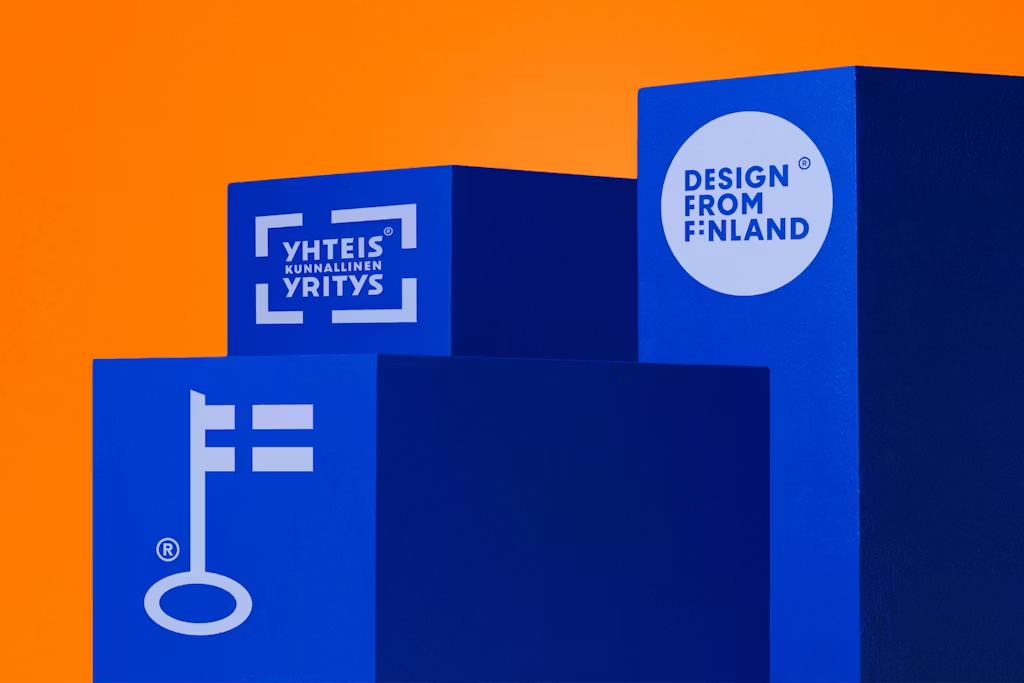
The EU Directive on Empowering Consumers for the Green Transition changes how companies may communicate the environmental and sustainability characteristics of their products and services. For Finnish Work’s member companies, the message is clear: the Key Flag Symbol, Design from Finland Mark and Social Enterprise Mark can continue to be used as normal after the new rules begin to apply.
The Directive on Empowering Consumers for the Green Transition, also known as the EmpCo Directive, aims to prevent greenwashing and ensure that environmental claims made to consumers are reliable, specific and verifiable. In Finland, the Directive is being implemented through amendments to the Consumer Protection Act, which tighten the requirements governing environmental and sustainability claims and sustainability labels used in marketing.
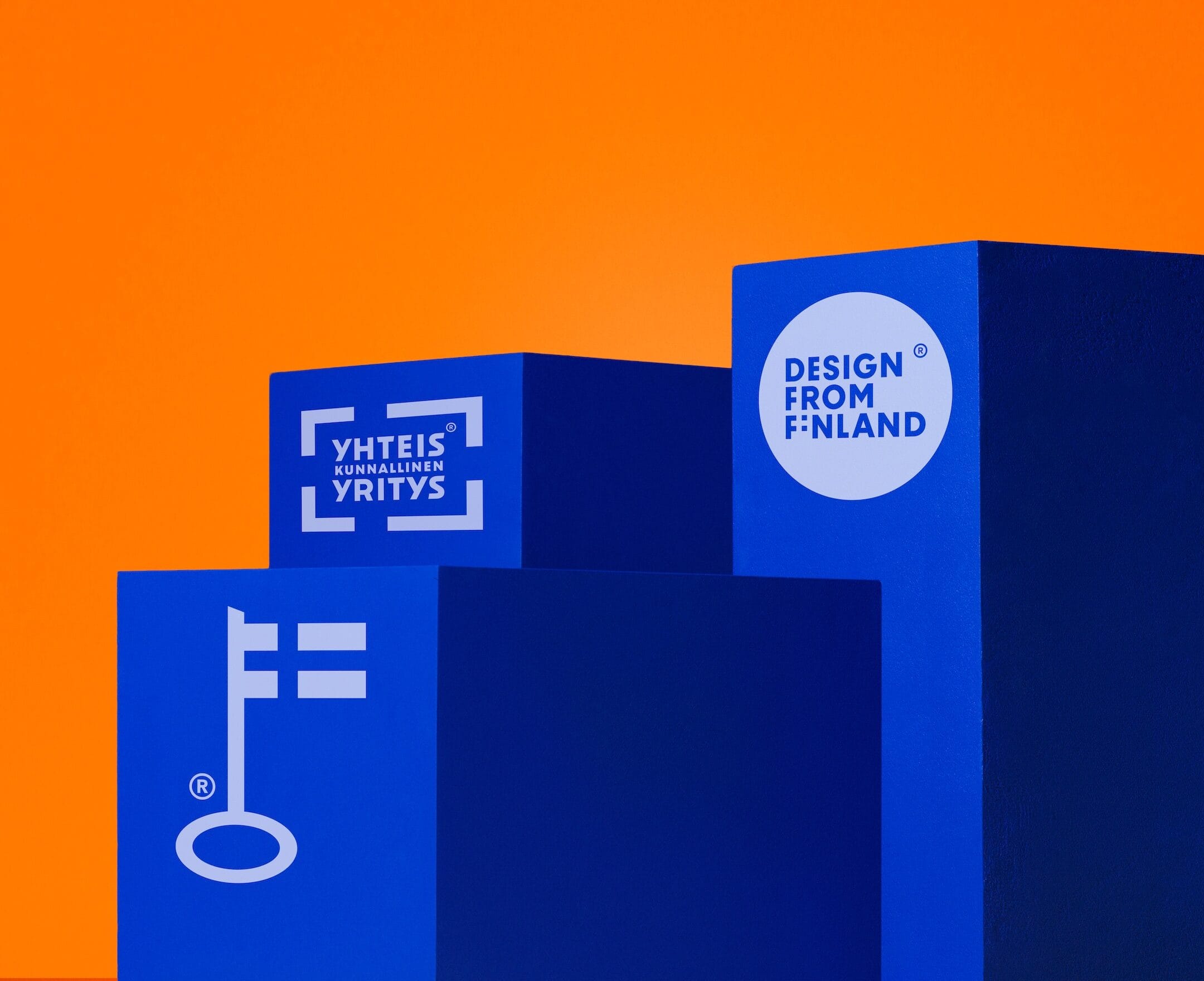
Finnish Work’s Key Flag Symbol, Design from Finland Mark and Social Enterprise Mark are granted upon application against defined criteria. They communicate Finnish manufacturing and work, Finnish design and the social-enterprise business model. They are not environmental labels or sustainability labels within the meaning of the legislation and may therefore continue to be used in the same way as before.

What will the new rules change in practice?
Under the Directive, claims used in marketing, such as ‘responsible’, ‘environmentally friendly’ and ‘climate friendly’, must be specific, substantiated and verifiable. Companies must also pay attention to their use of logos, symbols, photographs and other visual elements if these may give consumers an impression of environmental benefits.
The changes concerning marketing, environmental claims and sustainability labels will apply from 27 September 2026. A national transition period has been introduced for labels already displayed on products and packaging. If goods were placed on the market before 27 September 2026, certain new prohibitions concerning marketing information displayed on the goods or their packaging will apply only from 27 March 2027.
The transition period applies only to products placed on the market before the new rules apply and to packaging that already contains the product. It does not apply to marketing in general.
What do Finnish Work’s marks communicate?
Finnish Work’s marks will continue to provide a clear and recommended way for companies to communicate how their products, services, design or operations are connected to Finland and Finnish work. The marks must not be used, for example, to substantiate an environmental claim or as general sustainability labels.
The Key Flag Symbol may continue to be used to show the contribution of Finnish work and that a product is manufactured or a service is provided in Finland. Communications accompanying the symbol may explain, for example, where the product is manufactured, that the work is carried out in Finland, or the product’s or service’s degree of domestic content. The Key Flag Symbol does not in itself demonstrate that a product has a smaller carbon footprint or is environmentally friendly. If a company wishes to make claims about a product’s emissions, environmental impacts or other sustainability characteristics, these claims must be supported by evidence.
The Design from Finland Mark may be used to communicate Finnish design. The mark may be accompanied by information about design work carried out in Finland, investment in design and user-oriented design. However, if longevity or durability is linked to environmental impacts, the statement may become an environmental claim and must then be clearly substantiated and verified.
The Social Enterprise Mark may be used to communicate a company’s social mission, the transparency of its operations, or the fact that it uses most of its profits to advance its social objective. If communications combine social and environmental impacts, any environmental claims must be substantiated separately.
Legislative materials recognise the Key Flag Symbol and Design from Finland Mark as indications of origin
The preparatory materials for the legislation support Finnish Work’s interpretation that labels indicating Finnish origin or domestic content should not, as a rule, be regarded as sustainability labels within the meaning of the Directive.
The Finnish Parliament’s Commerce Committee stated in its report that a label which solely indicates the domestic origin of a product should not in itself be considered a sustainability label as defined in the Directive. The Committee recommended that the government decree and its explanatory memorandum clarify which labels are not considered sustainability labels.
The Ministry of Justice’s explanatory memorandum consequently states that the Key Flag Symbol and the Design from Finland Mark, for example, may be regarded as indications of the origin of goods.
What should member companies do?
Our member companies may continue using the marks as normal on packaging, websites, social media and other marketing communications, provided that each mark is used for its intended purpose. In practice, this means two things:
1. Continue using the marks for their intended purposes and in accordance with the relevant guidelines.
2. Do not use the marks to support environmental claims or as general sustainability labels.
More information about using the marks is available on Finnish Work’s website and in the Extranet member service. If you do not have login credentials for the Extranet, please contact our customer service at asiakaspalvelu@suomalainentyo.fi.

Remember these points
Keep the following in mind when using Finnish Work’s marks in marketing:
Use the mark only for the purpose for which it was granted.
Explain clearly what the mark means and the criteria on which it was granted. You can link the mark logo or accompanying text to the mark criteria on our website:
Criteria for the Key Flag Symbol
Criteria for the Design from Finland Mark
Criteria for the Social Enterprise Mark
Do not use a mark as evidence for environmental claims such as ecological sustainability, low carbon emissions or environmental friendliness.
Ensure that any environmental and sustainability claims you make can be substantiated and verified separately.
Consider the overall visual impression: logos, symbols and illustrations may create an environmental claim if they suggest environmental benefits.

More news

News
News commentary: Finland’s economy is growing rapidly – employment is still lagging
Based on data for January to June, Finland’s economy has been among the fastest-growing in…
News
New green transition rules apply from 27 September – Finnish Work’s marks can continue to be used as normal
The EU Directive on Empowering Consumers for the Green Transition changes how companies may communicate…
News
Finland’s Natural Stone Association, and thus its member companies, can now mark their stones with the important “Key flag”
The trademark is very popular in the Scandinavian country and is used not only in…